

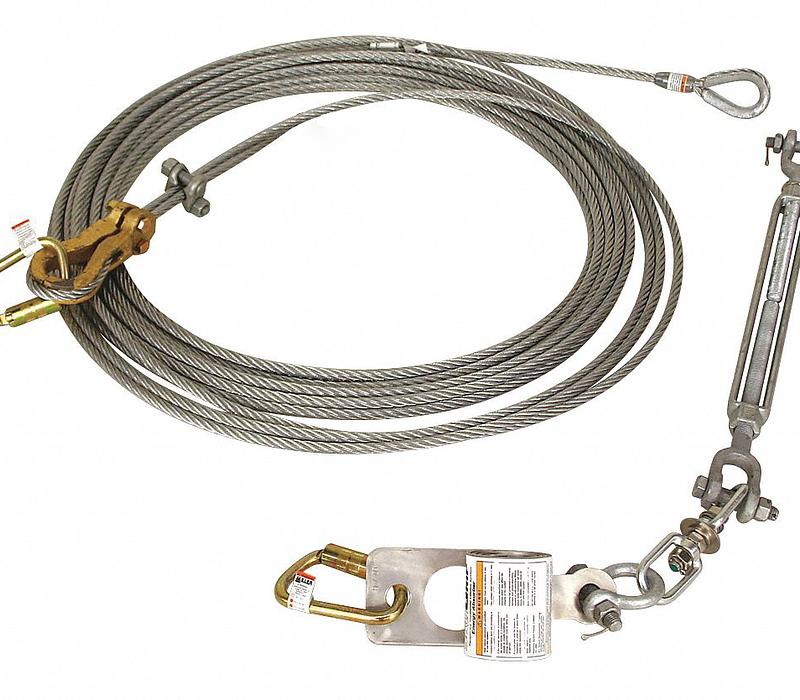
Permanent Horizontal Lifeline Systems provide continuous fall protection along a defined work path — allowing workers to traverse the length of the system while remaining connected to the lifeline at all times. Unlike single anchor points that require the worker to disconnect and reconnect when moving, a horizontal system enables uninterrupted travel along the lifeline's full length.
These engineered systems are permanently installed on rooftops, walkways, structural steel, elevated platforms, and any work area where employees need mobility while remaining protected against falls. The system typically consists of end anchors, intermediate supports, a tensioned cable or rail, and energy-absorbing components designed to arrest a fall and limit forces on both the worker and the supporting structure.
Horizontal lifeline systems must be designed by a qualified person or professional engineer per ANSI/ASSP Z359.6 and OSHA requirements. The design must account for the number of workers on the system simultaneously, the span between supports, the structure's load-bearing capacity, and the system's energy absorption requirements in a fall event.
Amick provides design, professional installation, inspection, and recertification services for permanent horizontal lifeline systems from our Pittsburgh facility.
Continuous fall protection — horizontal lifeline systems designed, installed, and inspected by Amick. Call 412-429-1212.
Type
Engineered permanent horizontal lifeline systems — cable or rail.
Applications
Rooftops, elevated walkways, structural steel, bridge decks, elevated platforms, tank tops, and any elevated work area where workers need continuous mobility while remaining connected to fall protection. Common in construction, facility maintenance, industrial plant operations, and energy sector work.
Exceptions
Horizontal lifeline systems must be designed by a qualified person or professional engineer. The supporting structure must be evaluated for the imposed loads, including dynamic fall arrest forces. Never exceed the number of simultaneous users the system is designed for. Inspect the entire system — including cables, end anchors, intermediate supports, and energy absorbers — before each use period and per the manufacturer's recommended inspection schedule. The system must be taken out of service and inspected by a competent person after any fall arrest event.