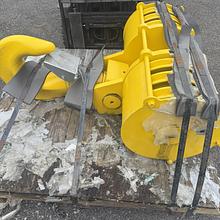

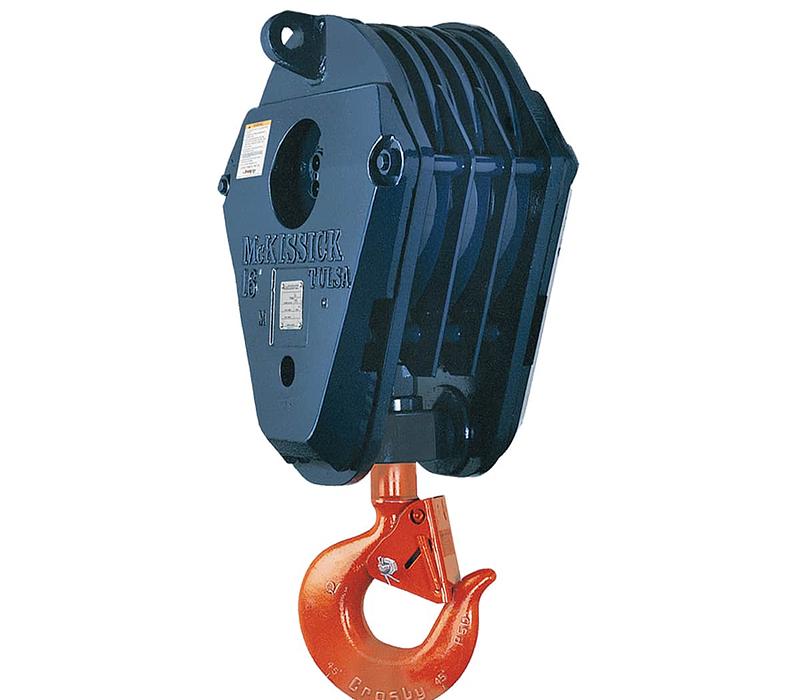
Rigging Blocks — also called snatch blocks or pulley blocks — are sheave assemblies housed in a frame with a hook, shackle, or eye attachment for connecting to rigging systems. Blocks are used to change the direction of a wire rope or synthetic line, to provide mechanical advantage (increasing pulling force), and to manage rope routing in complex rigging configurations.
Snatch blocks feature a hinged side plate that allows the wire rope to be inserted into the sheave without threading it through from the end — a significant time saver in field rigging. Standard blocks require the rope to be threaded through.
Block capacity depends on the number of sheaves, the rope diameter, and the rigging configuration. When a block changes the direction of a rope under load, the forces on the block's attachment point are amplified — a factor that must be accounted for in rigging calculations.
Blocks are covered under ASME B30.26 as rigging blocks. Amick stocks blocks from our Pittsburgh facility.
Change direction, gain advantage — rigging blocks stocked in Pittsburgh. Call 412-429-1212.
Type
Snatch blocks, standard rigging blocks, and multi-sheave blocks. Hook, shackle, and eye mount configurations.
Applications
Changing wire rope direction in rigging systems, providing mechanical advantage for pulling and lifting, managing rope routing, and any application requiring a pulley in the rigging configuration. Used in construction, utility, marine, towing, and general industrial rigging.
Exceptions
Account for amplified forces at the block attachment point when the rope changes direction — the load on the block can exceed the line pull depending on the angle. Match sheave size to the wire rope diameter to prevent rope damage. Inspect sheave, bearings, frame, side plates, and attachment hardware before each use. Annual documented inspections required per ASME B30.26.