

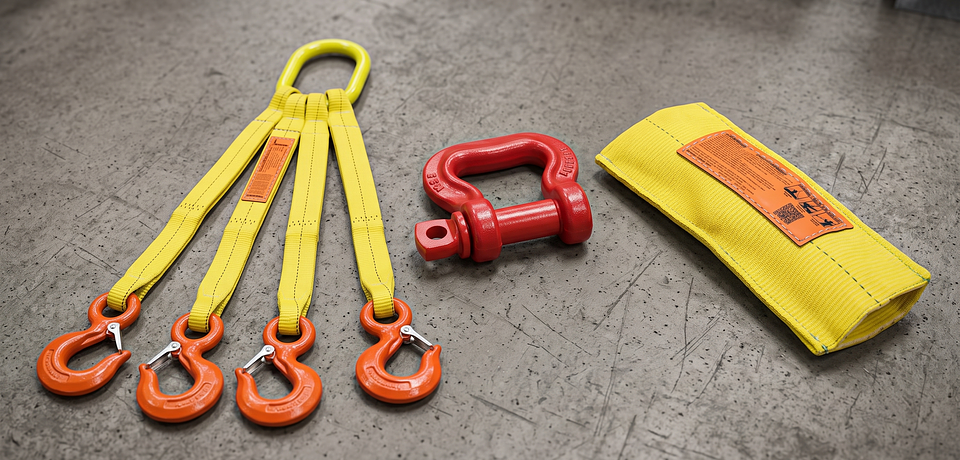
Multi-Leg Bridles
When a load has permanent lifting attachments — engineered pick points, welded eyes, or integrated lifting hardware — a bridle assembly delivers a balanced, ready-to-lift solution. Rather than rigging individual slings for each pick point, a multi-leg bridle connects two, three, or four sling legs to a single master link, giving operators a purpose-built assembly built for the load.
Amick fabricates multi-leg bridles in both polyester and nylon, using either flat web or round sling construction. Web bridles offer the lightweight, non-marring characteristics of synthetic web slings. Round sling bridles offer the flexibility and load-conforming properties of round slings. Both are cost-effective alternatives to chain or wire rope bridles when the load and environment allow.
For three- and four-leg bridle assemblies, rated loads are calculated assuming only two legs carry the load unless an engineering analysis confirms otherwise — a standard ASME B30.9 rule that protects operators against uneven load distribution across legs.
Web Shackles and Fittings
A sling is only as safe as its connection point. Standard rigging hardware can have narrow bows, sharp edges, or profiles that concentrate load pressure onto synthetic webbing — shortening service life and increasing the risk of damage during a lift.
Web shackles and fittings are purpose-built hardware designed for use with synthetic web and round slings. The distinguishing feature is a wider bearing surface — an expanded bow, smooth rounded edges, and geometry that allows the webbing to lay flat without bunching, folding, or pinching. The result is a secure connection that protects the sling and distributes the load across a larger contact area.
Amick supplies web shackles and fittings designed exclusively for synthetic sling applications. To discuss the right hardware for your slings and application, contact the Amick team directly.
Pads and Wear Protection
The single most damaging thing to any synthetic or wire rope sling is contact with sharp edges, corners, or abrasive surfaces. ASME B30.9 is explicit: slings in contact with edges, corners, protrusions, or abrasive surfaces shall be protected with material of sufficient strength, thickness, and construction to prevent damage. Wear protection isn't optional — it's a compliance requirement whenever those conditions exist.
Amick offers a full line of wear protection designed for common damage sources: sharp edges, rough surfaces, and abrasive contact points that can cut through webbing or round sling jackets in a single lift. Products include Shark Skin, Felt, Kevlar Felt, Ballistic Nylon, and Heavy Duty Nylon Quick Sleeves (Velcro).
Wear protection is available for synthetic web slings, round slings, and wire rope slings. Select protection appropriate for the hazard — abrasion-resistant protection and cut-resistant protection are not the same, and matching the pad material and thickness to the sharpness and abrasiveness of the load surface is what makes the difference between a sling that lasts and one that fails.
Inspect wear pads before each use for cuts, tears, and excessive wear. Damaged protection is no protection at all.
Built to Match the Sling
Bridles, hardware, and wear protection aren't universal — they're matched to the sling and the lift. A wear pad sized to the width of the webbing, a shackle sized to the sling's profile, or a bridle built to the geometry of the load — each accessory is specced and fabricated to fit the specific slings and applications in your operation.
To discuss accessories for your sling inventory, contact Amick at 412-429-1212 or visit our Lifting Slings page.